Christian Mindfulness for a Calmer, Steadier Mind
August 21, 2026
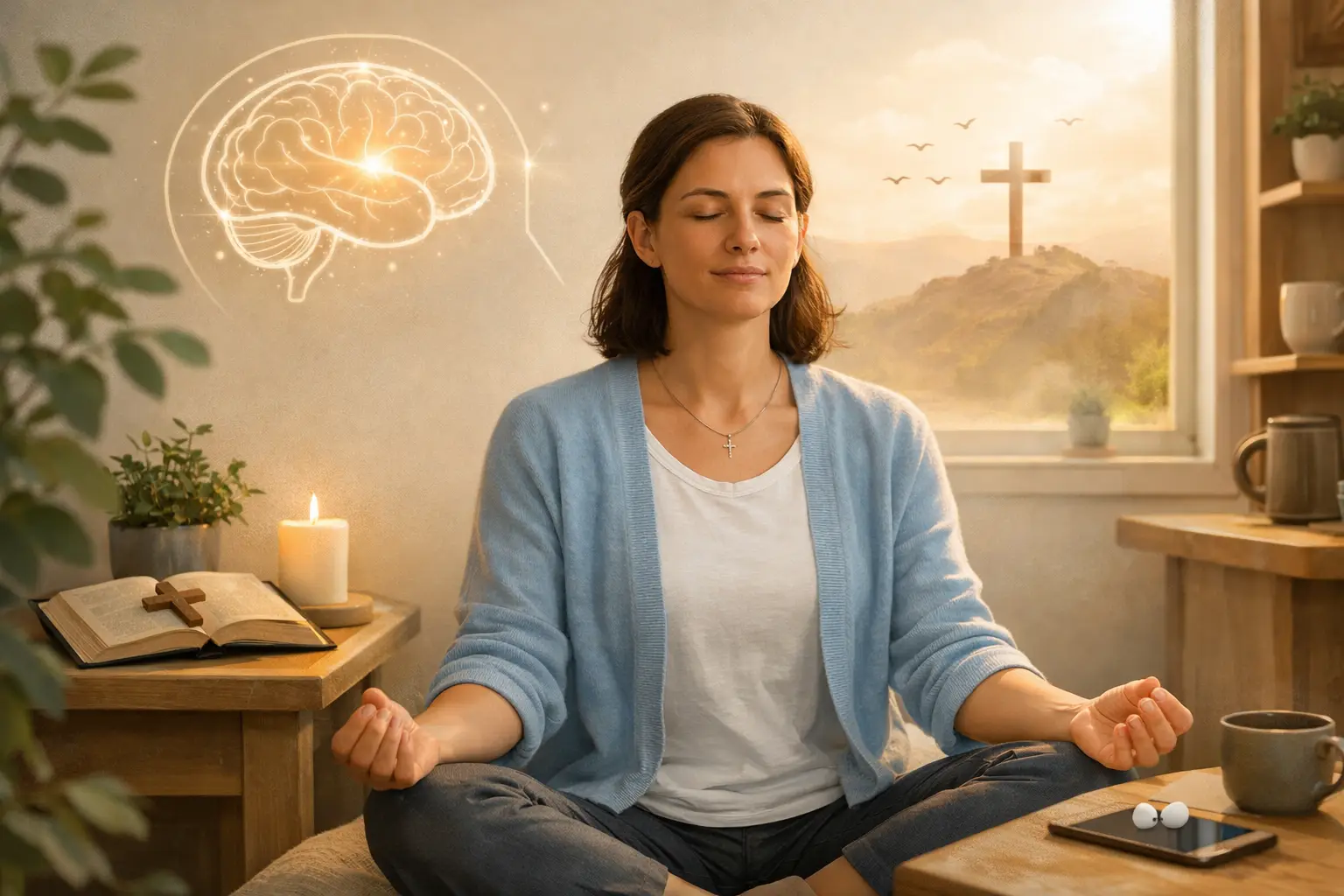
Your body can be sitting at the kitchen table while your mind is already answering tomorrow’s emails, replaying a hard conversation, and worrying about what might go wrong. Christian mindfulness creates a brief, intentional pause in that cycle. It helps you bring your attention back to the present, your body back toward steadiness, and your heart back before God.
This is not about emptying your mind or trying to escape real life. It is a practice of noticing what is happening within you, then choosing where to place your attention. For Christians carrying full schedules, family responsibilities, ministry demands, or persistent mental fatigue, that choice can become a meaningful daily rhythm of renewal.
What Christian Mindfulness Is and Is Not
Christian mindfulness is the practice of paying purposeful, nonjudgmental attention to the present moment in the presence of God. It may include quieting your pace, noticing your breathing, listening to Scripture, observing your thoughts, and returning your focus to what is true.
The distinction matters. Some forms of mindfulness ask a person to detach from thoughts or seek awareness as an end in itself. A Christian practice has a different center. Attention is directed toward God, His presence, and His truth. Stillness is not emptiness. It is a place to receive, remember, pray, and respond.
Scripture gives language for this kind of intentional focus. “Be still, and know that I am God” is not a command to become passive. It is an invitation to stop striving for a moment and remember who is sovereign. Likewise, Philippians 4:8 directs believers to set their minds on what is true, honorable, just, pure, lovely, and worthy of praise.
Christian mindfulness does not deny anxiety, grief, anger, or distraction. It gives you a way to meet those experiences without immediately being ruled by them. You can notice, “My shoulders are tight. My thoughts are racing. I am bracing for bad news,” and then gently return to prayer, paced breathing, or a verse of Scripture.
Why a Short Daily Practice Can Make a Difference
Your nervous system is always gathering information about safety, urgency, and threat. When your day is filled with alerts, conflict, hurried transitions, and too little rest, your body may remain on high alert even after the immediate pressure has passed. That can make it harder to think clearly, respond patiently, or stay present with the people you love.
Paced breathing, gentle movement, and focused attention can support a shift from reactivity toward regulation. This does not make stressful circumstances disappear. It can help your body receive the signal that it is safe enough, in this moment, to slow down and choose a more intentional response.
There is also a brain-training component. Neuroplasticity is the brain’s ability to adapt and strengthen patterns through repeated experience. Each time you interrupt a familiar cycle of rushing, catastrophizing, or distracted scrolling and practice a grounded response instead, you are giving your brain another opportunity to reinforce that healthier path.
One seven-minute practice will not remove every reactive pattern. Repetition is what matters. A brief, consistent rhythm can become more useful than a long practice you only attempt when life is already overwhelming.
A Seven-Minute Christian Mindfulness Practice
You do not need a perfect quiet room or a perfectly calm mind to begin. The goal is not performance. It is returning, again and again, to a centered posture before God.
1. Arrive in your body
Begin by sitting with both feet supported or standing with a steady posture. Notice the contact points beneath you. Let your shoulders lower if they are lifted. Unclench your jaw.
This simple check-in is not self-focused in a shallow way. Your body is part of your lived experience with God. When you notice tension rather than ignoring it, you create room to respond with care instead of carrying stress without awareness.
2. Slow your breathing
Try breathing in gently through your nose and breathing out a little longer than you breathed in. For example, inhale for four counts and exhale for six, using a pace that feels comfortable. Continue for a minute or two without forcing a deep breath.
A longer, unhurried exhale can support nervous-system regulation. If counting distracts you, pair each breath with a simple prayer: “God, You are here” on the inhale, and “I place this in Your hands” on the exhale.
If breathwork feels uncomfortable because of a health condition, trauma history, or panic symptoms, keep the practice gentle. You can simply observe your natural breathing while grounding yourself through Scripture, posture, or a quiet walk. The practice should feel supportive, not demanding.
3. Anchor your attention in Scripture
Choose a short passage rather than trying to process a full chapter. Read it slowly once, then again. Notice one word or phrase that meets your current need.
You might sit with Jesus’ words in John 14:27: “Peace I leave with you; my peace I give to you.” Or you may return to Isaiah 26:3: “You keep him in perfect peace whose mind is stayed on you.”
Ask, “What is this showing me about God?” Then ask, “What response might this invite from me today?” The answer may be simple: release a fear, slow your pace before a meeting, speak more gently, or remember that you are not carrying the day alone.
4. Notice thoughts without following every one
Thoughts will arise. That is normal. You may remember an unfinished task, replay something painful, or begin planning dinner. Rather than criticizing yourself, name what happened: “I am worrying,” “I am planning,” or “I am replaying.”
Then return to the Scripture, the feeling of your feet on the floor, or your prayer phrase. This return is the practice. Over time, it strengthens your ability to notice distraction and redirect your attention with less frustration.
5. Choose one faithful next response
Before you move back into your day, identify one small action that reflects the peace or wisdom you have received. It may be sending a thoughtful message, taking a pause before responding, drinking water, stepping outside, or beginning a difficult task without avoidance.
Mindfulness becomes more than a quiet moment when it shapes how you live after the moment ends.
When Christian Mindfulness Feels Difficult
Some days, stillness may reveal how tired, sad, or overwhelmed you feel. That does not mean you are doing it wrong. Awareness can be uncomfortable when you have spent a long time pushing through.
On those days, reduce the practice rather than abandoning it. Take three slower breaths. Read one verse. Place a hand over your heart and pray one honest sentence. Consistency grows through realistic practices, especially during demanding seasons.
It also helps to avoid measuring every session by whether you feel peaceful afterward. Sometimes renewal looks like calm. Other times, it looks like recognizing your limits, naming your need, or choosing not to react from stress. God’s presence is not proven by a particular emotional state.
Christian mindfulness is not a replacement for pastoral care, medical support, or mental health treatment when those are needed. If persistent anxiety, depression, trauma symptoms, or distress are affecting your daily functioning, seeking support from a qualified professional can be a wise and faithful step.
Build a Rhythm That Can Last
Attach your practice to a reliable part of your day: before checking your phone, after school drop-off, during a work break, or before bed. The best time is not necessarily the quietest time. It is the time you can return to with reasonable consistency.
A structured journey such as My Neuro Faith can help remove the pressure of deciding what to do each day. Its seven-minute Daily Renewal brings together Scripture, paced breathing, brain-body exercises, and guided attention practices in a repeatable rhythm designed to support spiritual connection, mental clarity, and emotional steadiness.
You are not meant to live in constant stress. Begin with the next seven minutes: settle your body, receive a word of truth, and let your attention return to the God who is already near.
Ready to build a healthier daily rhythm for your brain, body, and spirit?
Get startedMy Neuro Faith offers faith-based wellness education. It is not medical or mental health treatment, diagnosis, or therapy. Please consult a qualified professional for medical or mental health concerns.