Nervous System Regulation for Everyday Peace
August 20, 2026
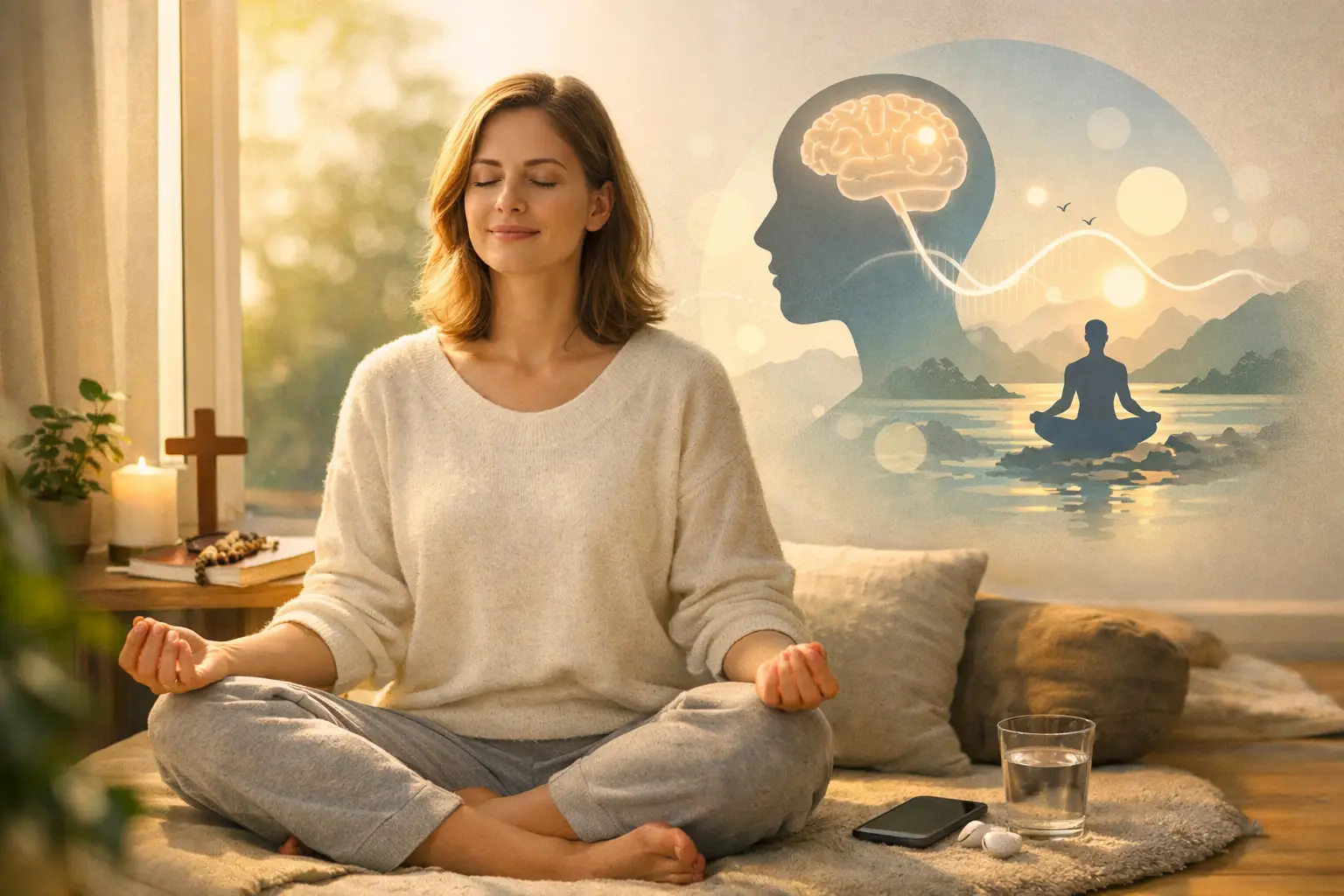
A tense jaw in the school pickup line. A racing mind before a difficult meeting. A sharp response that comes out before you have time to choose a better one. These are familiar signs that your body may be carrying more stress than it knows how to release. Nervous system regulation is the practice of helping your brain and body move from reactivity toward a steadier, more grounded state.
This is not about pretending life is easy or forcing yourself to feel peaceful. It is about creating small, repeatable conditions that help you pause, notice, and respond with greater intention. For Christians, this work can become part of a faithful rhythm: bringing the whole self - body, mind, attention, and spirit - before God.
> “Be still, and know that I am God.” - Psalm 46:10
Stillness is not passive when it is practiced. It is a way of making room for a wiser response.
What nervous system regulation means in daily life
Your nervous system is constantly gathering information. It notices your schedule, your surroundings, the tone of a conversation, a troubling headline, and the thoughts you repeat internally. When it senses pressure or threat, your body may prepare to act quickly. Your breathing can become shallow, your shoulders may tighten, and your attention may narrow around the problem in front of you.
That response can be helpful in a true emergency. But when stress becomes frequent, the body can remain on alert long after the immediate demand has passed. You may feel distracted, irritable, exhausted, emotionally numb, or unable to settle even when you finally have a quiet moment.
Nervous system regulation does not mean eliminating stress. It means practicing ways to signal safety, steadiness, and support to your brain-body system. Over time, these practices can strengthen your capacity to return to center after disruption.
This is where repetition matters. A single slow breath may bring a moment of relief. A daily pattern of breathing, prayer, movement, and focused attention gives your brain more opportunities to reinforce a healthier response. That is a practical expression of neuroplasticity: the brain’s ability to adapt through repeated experience.
Why willpower alone often falls short
Many people try to manage stress by telling themselves to calm down, think positively, or stop overreacting. Those intentions are understandable, but they often ask too much of a body that is already overwhelmed.
When your stress response is active, clear thinking can become harder. You may know what you want to say, believe, or do, yet feel unable to access it in the moment. This is not a character failure. It is a signal that your system may need a reset before you ask yourself to make a thoughtful decision.
Prayer can be a powerful anchor in that reset, especially when it is paired with a physical practice. A short Scripture reflection helps direct attention. Paced breathing can slow the rush of the moment. Gentle movement can release some of the tension held in the body. Together, these practices create a bridge between what you believe and what you are able to embody under pressure.
A seven-minute rhythm for regulation
You do not need an hour of silence or a perfectly organized morning to begin. A brief practice is more likely to become a real part of your life when it fits the life you actually have. Try this simple seven-minute rhythm before work, during a break, or when you transition back into your home.
1. Arrive in your body for one minute
Sit with both feet on the floor or stand with a stable posture. Notice three physical points of contact: your feet, your hands, and the support beneath you. Let your shoulders lower without forcing them.
This is not about scanning for everything that is wrong. It is a way of telling your attention, “I am here.” If your thoughts keep moving, that is okay. Gently return to what you can feel in the present moment.
2. Use paced breathing for two minutes
Breathe in comfortably through your nose, then make your exhale slightly longer than your inhale. For example, breathe in for a count of four and out for a count of six, without straining. Continue at a pace that feels natural.
A longer, unhurried exhale can support the body’s settling response. The goal is not to perform a perfect breathing technique. The goal is to give your system a simple, repeatable signal that the moment does not require panic.
If breathing exercises make you feel lightheaded or uncomfortable, return to your normal breath and focus instead on grounding through posture, prayer, or gentle movement.
3. Anchor your attention in Scripture for two minutes
Choose one short verse and read it slowly. Rather than rushing to analyze it, let one word or phrase stand out. You might hold the phrase “The Lord is near” from Philippians 4:5, or “My peace I give to you” from John 14:27.
Then connect the verse to the moment you are living. Ask, “What would it look like to receive this truth in my body as well as my thoughts?” The answer may be as simple as unclenching your hands, softening your face, or releasing the need to solve everything right now.
4. Add gentle movement and a clear next step for two minutes
Roll your shoulders, slowly turn your head side to side, stretch your arms, or take a short walk across the room. Small movements can help interrupt the frozen, compressed feeling that often comes with stress.
End by naming one next faithful step. It may be sending one email, listening before responding, stepping outside for fresh air, or beginning a difficult conversation with a calmer tone. Regulation is not withdrawal from responsibility. It is preparation to meet responsibility with greater clarity.
Carry the practice into stressful moments
A morning reset is valuable, but daily life will still bring interruptions. The deeper skill is recognizing when you need a brief return to your grounding rhythm.
Pay attention to your early signals. Perhaps you start speaking faster, scrolling without purpose, snapping at your family, or rereading the same message without taking it in. These moments are invitations to pause before the reaction grows.
You may only have thirty seconds. Place both feet on the floor. Let out one slower breath. Whisper a short prayer: “Lord, steady me.” Look at one object in the room and name it silently. Then choose the next right response.
This may seem small, but small practices are often the ones that survive a demanding day. They also create a meaningful gap between stimulus and response. In that gap, you have more room to act from your values instead of your stress.
What progress can look like
Progress is not measured by never feeling anxious, frustrated, or tired. It may look like noticing your reaction sooner. It may look like recovering more quickly after a hard conversation, staying present with your child when your mind wants to rush ahead, or returning to prayer when distraction has pulled you away.
Some days, a practice will feel calming immediately. Other days, it may simply help you become aware of how much you are carrying. Both experiences can be useful. Regulation is a skill strengthened over time, not a switch you flip once.
It also depends on what is happening in your life. Ongoing grief, trauma, severe anxiety, or major life stress can require additional support from a qualified health or mental health professional. A spiritual wellness practice can complement that care, but it is not a replacement for it.
My Neuro Faith brings this kind of intentional practice into a structured 90-day journey, combining Scripture, paced breathing, simple brain-body exercises, and guided attention in a daily seven-minute renewal. The purpose is not merely to create a calm moment. It is to practice patterns that can support steadier attention, resilience, and spiritual connection throughout the day.
When stress rises today, you do not have to solve your whole life in that moment. Begin with one breath, one grounded posture, one remembered promise from Scripture, and one faithful next step. Repetition can make that return more familiar - and peace can become something you practice, not just something you hope to find.
Ready to build a healthier daily rhythm for your brain, body, and spirit?
Get startedMy Neuro Faith offers faith-based wellness education. It is not medical or mental health treatment, diagnosis, or therapy. Please consult a qualified professional for medical or mental health concerns.